
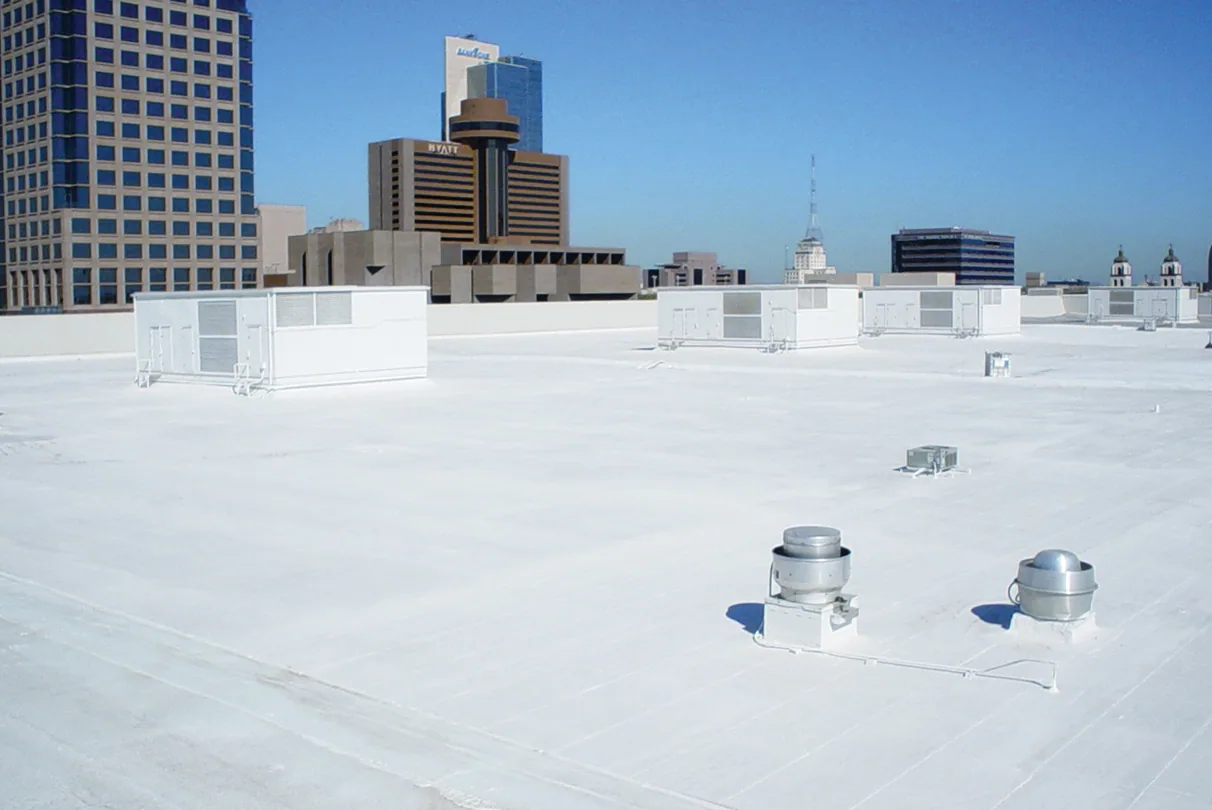
A white or light-colored roof reflects sunlight and keeps the roof surface cooler, which can lower cooling loads on Chesapeake summer days. But a reflective surface doesn't fix a leak. If a civic building has a failed curb flashing, a new white membrane laid around it will still leak at that curb.
Cool roof installation in Chesapeake starts with the whole roof: what has to come off, what condition the insulation is in, how the edges and curbs will be flashed, and which reflective product makes sense. We compare product data with the condition of your roof and any project requirements. On a government building roof, we also need to know which rooms are occupied and when we can work. A light color alone doesn't mean every part of the system meets the project's requirements.
In the Greenbrier commercial area and elsewhere in Chesapeake, we inspect the building and its existing roof first. We review any records and requirements for that roof section. A leaking curb may need new blocking before the new membrane goes on. Quantities are based on the insulation and flashing work we confirm. The building operator also confirms room protection and access before we open any roof over occupied space.

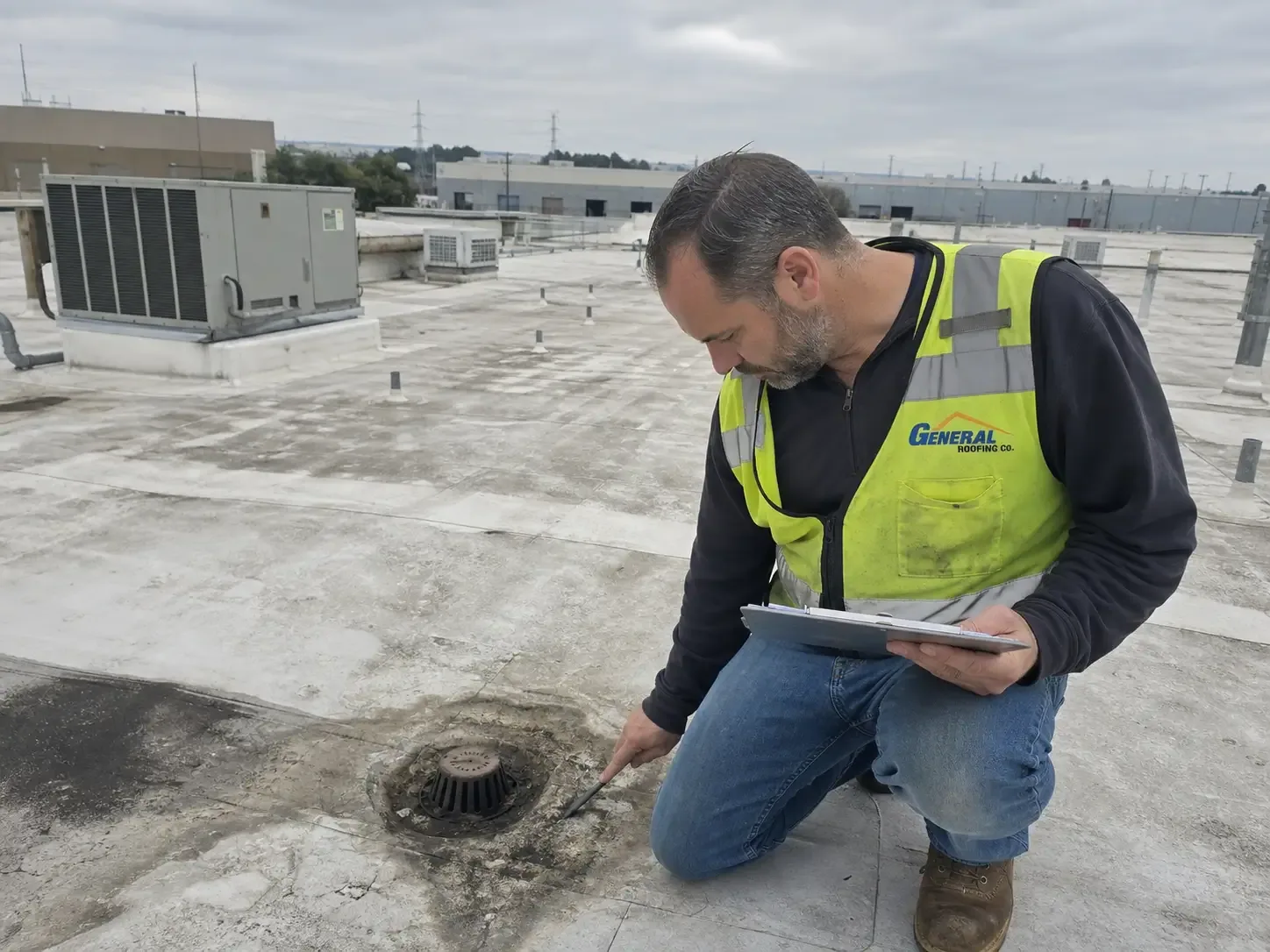
A cool roof is the whole roof, not just the color
Picking a reflective finish and getting a properly installed roof are two separate decisions. We identify the exact product and pull its performance data if you need it for a code, utility rebate or owner requirement. Insulation, attachment and flashing details are part of that decision, not just the color of the top layer.
"Cool roof" is a broad label. Different products have different reflectance values and installation requirements, so we spell out the actual system and its components. That way, comparing finishes doesn't hide tear-off or prep work. The membrane is one part of a complete roof.
A roof replacement with a reflective membrane should state what comes off and what the new roof goes on. We compare what we see with the proposed system and note anything that needs a closer look. Wanting a particular membrane doesn't mean the old layers can stay. If insulation is wet or damaged, the price includes removing it and replacing it. That work goes in the proposal alongside the membrane. A new reflective sheet won't dry out wet insulation underneath. The plan is based on what we find, not just the product you want on top.
Insulation and flashing come first
A clean, bright new surface can cover insulation or deck that needs repair. We separate what we can see from what we suspect, like hidden moisture or loose attachment, and we confirm before setting final quantities. You'll see what stays and what's being replaced.
A smooth field doesn't prove the insulation underneath is sound. The new roof has to meet the insulation and attachment requirements for that system, and those requirements stay visible while you compare finishes. A product change shouldn't hide work that still needs doing.
Adding insulation, which many cool roof projects do, raises the roof and changes the flashing height at walls, curbs and drains. We measure those details against the new roof thickness and plan any rebuilds before ordering flashing parts. A roof with the same footprint doesn't always need the same amount of flashing work. If a rooftop unit has to be lifted, the HVAC contractor's part is scheduled alongside ours. The color of the membrane doesn't solve any of these issues. The finished roof should fix the leaking details as well as renew the field.
Comparing TPO, PVC and other options
A TPO roof is one of the most common cool roof choices, but the exact product and accessories matter. We list the insulation prep and flashing details with the membrane so you can compare real installation costs, not just a brand name or a color. Two bids covering the same square footage may not include the same edge metal or attachment.
A low price on the membrane shouldn't mean leaving out needed insulation repairs. Every option should be priced to the same finished roof. The membrane also needs the right weather and a clean, dry surface on installation day.
A PVC roof is another reflective option with its own installation requirements. We describe how the insulation and flashing work changes with each product. Review the product data sheets and warranty requirements before ordering. Two white roofs may look the same but use different materials and take different amounts of labor at the details. Each option should deliver the same finished roof and the same protection for the building. Having one component in stock doesn't make a system approved. Whichever product you choose, the prep and flashing work stays the same, and the new roof closes the leaks we found.
Coating as an alternative to replacement
A reflective roof coating restoration can be an alternative to replacement on the right roof. It needs a sound surface that the coating will bond to, and the coating manufacturer's requirements have to be met. We list the needed repairs and flashing work alongside the coating so you can compare it fairly with a new membrane.
Square footage alone doesn't make a coating and a new membrane equal. We check compatibility, prep and application conditions before ordering. A coating won't fix wet insulation underneath, so confirmed wet areas still get replaced first. Both options should end up with the same watertight roof.
For roof projects in Greenbrier and Great Bridge, we start with the specific roof and the building operator. We plan room protection and any equipment shutdowns along with the installation. Working in phases can mean extra moves and setup, and that goes in the scope. A written schedule shows access and protection for each area. Choosing a product doesn't open every occupied area at once. Flashing parts need to be ready, not just the membrane, and the roof needs the right weather. Any details that can't be finished yet stay on the list until they're done.
Records to keep after installation
After the job, a roof inspection record should note what we found and any open questions. We keep the product data for the system you chose along with records of insulation repairs. Finished flashings and any inspections belong in the same file. You can trace the original problem to the finished roof.
Interior repairs follow once each roof area is finished. A completion date for the field doesn't close out equipment work or paperwork that's still open. Product data stays with the system installed. The records describe the roof as built, not a general promise based on the color.
Maintenance and warranty instructions come from the actual products and documents. A product name alone doesn't tell you the warranty term or what it covers. We go over the paperwork before pricing the job. If a curb or penetration is added later, the new work needs to be checked against the installed roof. Any concerns outside the project are noted for later. Photos and a short summary tie the original problem to the finished roof.
Commercial Roofing Questions
How do we pick a reflective product?
Start with the actual product, the full roof system and any project, code or rebate requirements. Review the product data, not just the color.
Does choosing a cool roof decide what layers can stay?
No. The condition of the existing roof decides that. We confirm insulation condition before quantities are set.
How should two cool roof products be compared?
Compare the whole installed roof, including insulation, flashing and attachment, not just the membrane price.
Can a reflective coating replace a new roof?
Sometimes. The existing roof has to be sound enough to coat, and wet areas still need repair. We price both to the same finished result.
What should we keep after the roof is installed?
Product data, warranty documents, photos of the finished work, maintenance requirements and a list of any open items.
Planning a cool roof?
Send us the products you're considering, any roof records and project requirements. We'll look at the whole roof and explain what needs fixing alongside the new surface, with photos.